Three engineers reviewing a tablet during a pipeline walkdown

The system of record for who is qualified, and the evidence to prove it

VISION is training and qualification management software for operations where being reviewed is routine. Two tools on one set of data: an authoring environment where the program gets built and a learning station that delivers it, over a qualification record that proves it happened. Built on the systematic approach to training, and built for programs where the qualification chain is long and somebody is going to check it.

Four decades holding the qualification record

40+ yrs

managing training programs in regulated industries

175+

organizations across energy, utilities, nuclear and government

6

authoring workscreens, from analysis through qualification cards

2

tools, one set of data, so a change in one shows in both

Your LMS can prove attendance. Can it prove qualification?

A learning management system records that somebody completed a course. That’s a different claim from somebody being qualified to perform a specific task to a defined standard, assessed by a named evaluator, on a date, against an objective that traces back to a validated task list.

In regulated work the second claim is the one you have to defend. Most organizations assemble it by hand, out of a learning system, a spreadsheet, a shared drive and somebody's memory, in the weeks before a review.

VISION keeps that chain intact as you work, so the evidence is already there when somebody asks for it.

Could you answer these today?

  • Can you prove every employee is qualified for every task they’re assigned?
  • Could your team assemble an evaluator's evidence request in hours rather than weeks?
  • When a curriculum changes, does it automatically connect to the affected roles, objectives, exams and qualifications?
  • Can leadership see training risk across sites and departments?
  • What knowledge leaves when a senior trainer retires?

One program, two tools

Authoring and delivery, sharing the same tasks, objectives and people, so a change in one is a change in both.

Engineer working through a technical drawing on screen
VISION Developer. Analysis, objectives, questions, tests and qualification cards in one authoring environment.

VISION Developer

Where the program gets built. Six workscreens cover analysis, objectives, program structure, questions, tests and qualification cards.

  • Task hazard analysis
  • Selecting which tasks get trained and which get retrained
  • Program hierarchies and cross references
  • Test generation and qualification cards

VISION Learning Station

Where people meet the program, including each person's own view of what they hold and what they still owe.

  • Course events and course delivery
  • Job aids and self-study
  • Surveys and course evaluations
  • Assessment profiles

What VISION manages

Not a feature list. These are the objects your program is made of, and VISION keeps them connected to each other.

Job and task requirements

The validated task list each role is measured against, under version control, with the history of what changed and when. Task hazard analysis sits here too, as its own workscreen rather than an attachment.

Objectives and curriculum

Learning objectives derived from tasks, organized by prerequisite relationship, then grouped and sequenced into courses and lessons.

Qualifications and qualification cards

Who is qualified for what, when it was earned, when it expires, and what the requalification path is.

Question banks, generated tests and OJT

Test items tied to the objective they assess, on-the-job training records, and the evaluator behind each sign-off.

Audit evidence

The traceable path from a task, through its objective and its training, to the qualified individual and the record that proves it.

Gaps and readiness

Automated reporting on where qualification is missing, expiring, or concentrated in too few people.

How the pieces stay connected

Five links. An evaluator can start at any one of them and walk the chain in either direction.

  1. 1

    Job task

    Validated with the people who do the work.

  2. 2

    Objective

    Derived from the task, not from the content.

  3. 3

    Training

    Built to teach that objective.

  4. 4

    Qualification

    Assessed, dated, and signed by a named evaluator.

  5. 5

    Evidence

    Retrieved from the system, not reassembled.

Change any link and VISION surfaces what else it touches. That is the difference between a record and a defensible record.

MADDIE, a supervised AI that stays inside your instance

MADDIE is a domain-trained assistant available to customers running cloud-hosted VISION. It was developed inside a secure, isolated cloud environment, and your data and its processing stay within your own isolated instance.

It’s narrow. MADDIE isn’t there to make judgment calls about your program; it’s there to remove the search-and-restate work that consumes an instructional designer's week.

What MADDIE does

  • Answers questions about systematic-approach-to-training principles
  • Explains how to use a given VISION feature
  • Summarises or restates training documentation
  • Keeps data and AI processing inside a fully isolated cloud instance

Available on cloud-hosted VISION installations.

Deployment, integration, and the wider platform

The parts of VISION that come up in procurement and in implementation planning.

VISION runs cloud-hosted or installed on your own infrastructure, and that choice is yours rather than ours. The authoring environment streams to the desktop through AWS AppStream, so a heavy tool installs nothing locally, and a fully browser-based version of it is in preview now. Sign-in runs through Keycloak, which means VISION can sit behind the identity provider you already use.
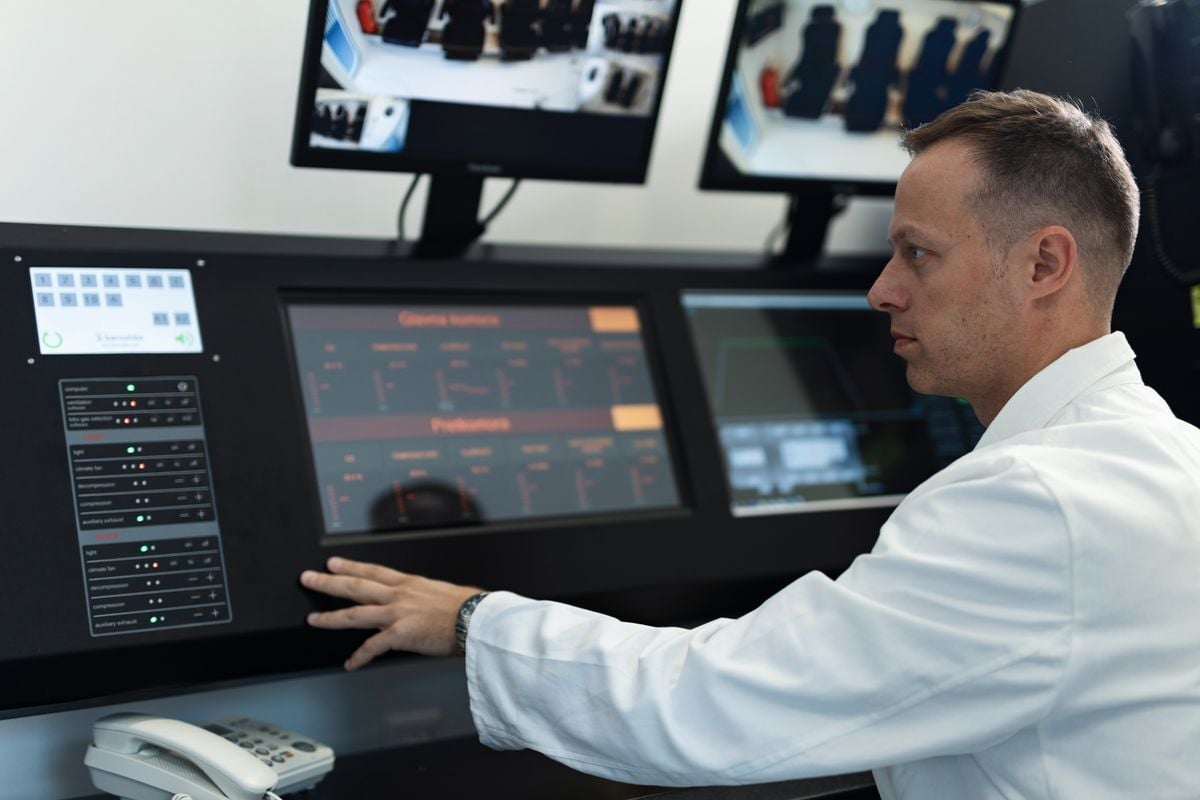
Operator at a modern control room panel
Hosted or on your own infrastructure, behind the identity provider you already use.

Cloud hosting

Secure hosted deployment, and the prerequisite for MADDIE.

Implementation and data migration

Moving years of qualification history in without losing the record.

Learning Station

Delivery to the people doing the work.

Action tracking

Findings, commitments and their closure.

VISION Connect

Connecting VISION to the systems around it.

Developer tools

Extending and configuring VISION for your own workflows.

Multi-unit nuclear generating station

Completion is not qualification

In regulated work the second claim is the one you have to defend, and it is the one a learning system was never built to make.

Organizations that trust FOCUS Learning

  • TVA
  • Constellation
  • Dominion
  • Duke Energy
  • Wolf Creek
  • Energy Northwest
  • AEP
  • PSEG
  • Vistra Energy

Product documentation

The VISION knowledge base documents both tools in full, alongside our standards and best practices for security, analysis, design, development, implementation and evaluation, and a full guide to applying the systematic approach to training inside VISION.

VISION Developer · Learning Station · Applying the SAT in VISION. Customer sign-in required.

Built for the person who has to defend the program

The person in this photograph is not the user of VISION. The user is the training specialist who has to show, later and on demand, that this technician was qualified for this task on this date, and what evidence supports it.

That is the job the software is shaped around. Not course delivery, though it does that too. The traceable chain behind a qualification decision.
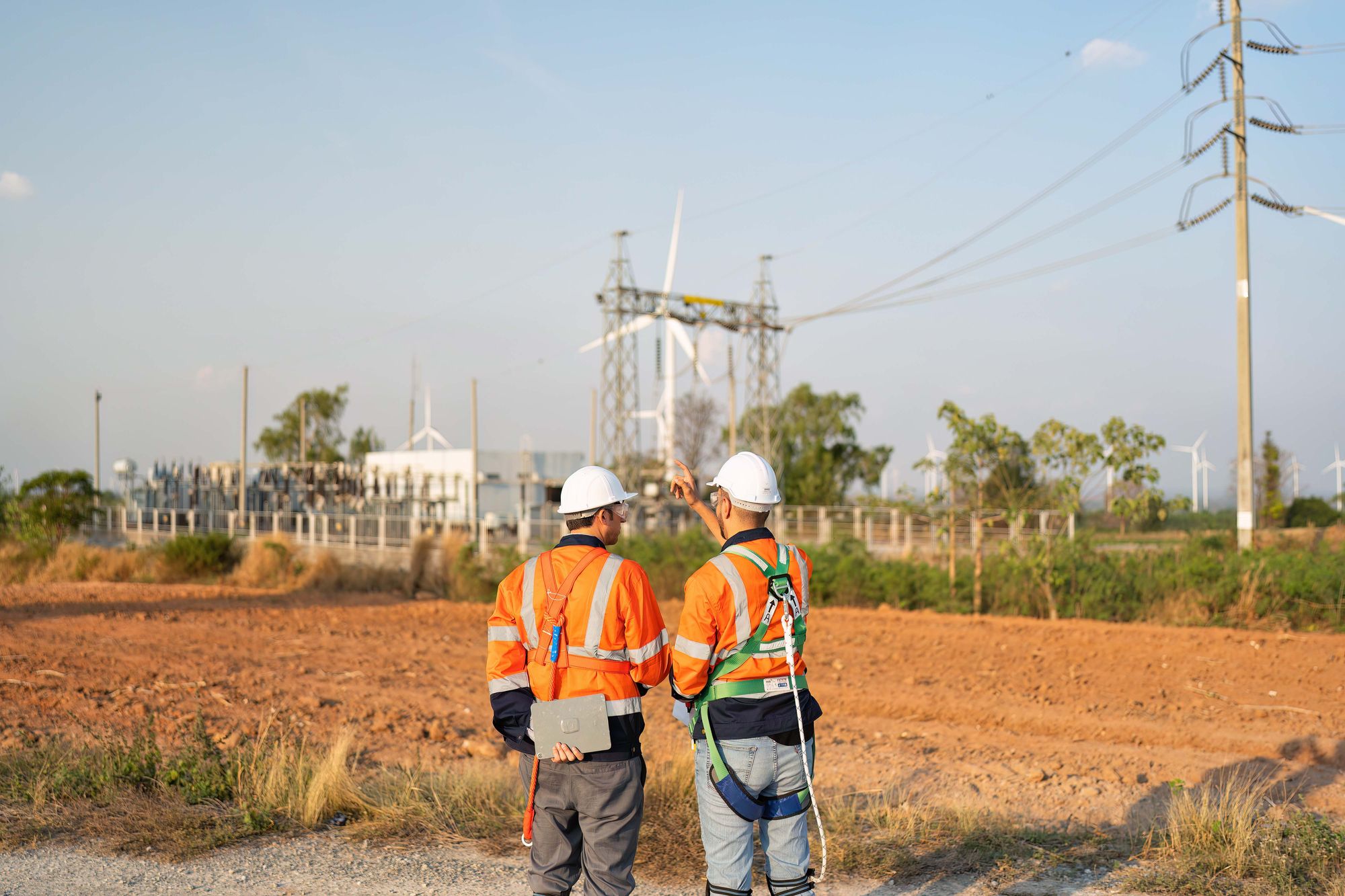
Technician on a wind turbine hub during inspection

In a customer’s own words

The way that the program ties the training process together is fantastic. The one thing that I would point out to utilities that are under-utilizing VISION is that they have a very powerful tool that will help them keep their training programs up to date and in compliance with industry standards. It is like having the best Swiss Army knife available and only using the toothpick.

Training leadUS nuclear operating fleet

Frequently asked questions

What comes up when a team is choosing a qualification system.

What is the difference between an LMS and a training and qualification management system?

An LMS delivers and records course content. A training and qualification management system manages the program around it: the validated task list, the objectives derived from that list, who is qualified to perform which tasks, and the evidence that proves it. In regulated work the second is what an evaluator tests.

Should I use VISION or Qlarity?

Both cover the whole training lifecycle and both are built on the systematic approach to training, so this is not a question of one being able to do something the other cannot.

VISION is modular: separate tools for authoring, delivery and method, and a deeper object model that includes qualification cards, hierarchies, cross references and task hazard analysis. It runs hosted or on your own infrastructure, and it is where MADDIE runs today. Qlarity is a single cloud application arranged around the phases of ADDIE, with a built-in NERC reporting set and a self-service portal for employees.

Most nuclear programs choose VISION and most PER-005 programs choose Qlarity, though not all of them, and we have PER-005 customers running VISION today. Tell us your regulator and how long your qualification chains are, and we will tell you which one.

Is VISION built on SAT and ADDIE?

Yes, and not as a label. The systematic approach to training is the reason the data model looks the way it does: tasks drive objectives, objectives drive materials and assessments, and every link is retained so the chain can be shown, not asserted. The same is true of Qlarity, which is why the choice between them isn’t about method.

The clearest evidence is that the method is documented step by step inside the product, from job analysis through writing objectives and selecting an instructional strategy. We have written that method up in full on our SAT and ADDIE methodology page, so you can judge the reasoning before you ever see the software.

Is MADDIE available on every VISION installation?

No. MADDIE is available to customers running cloud-hosted VISION, because it depends on the isolated cloud environment it was built in. Data and AI processing remain inside that isolated instance.

Can you migrate our existing qualification records?

Yes, and it’s scoped as its own engagement not assumed. Years of qualification history rarely lift cleanly, and the parts that matter most for compliance are usually stored least consistently. We audit the source, map it, migrate in validated stages, then reconcile the qualification records against the system you came from.

Do we need Professional Services as well?

Not necessarily, but the two are designed together. VISION holds the program; our services team builds and maintains it. Organizations with a small training team usually take both, because software doesn’t decide what qualified means.

See VISION against your own program

A working session, not a product tour. Tell us which standard you report against, when your next review lands, and how you track qualification today. We will show you the workflows that apply and what implementation would actually involve.


Technician operating plant controls with a tablet in hand