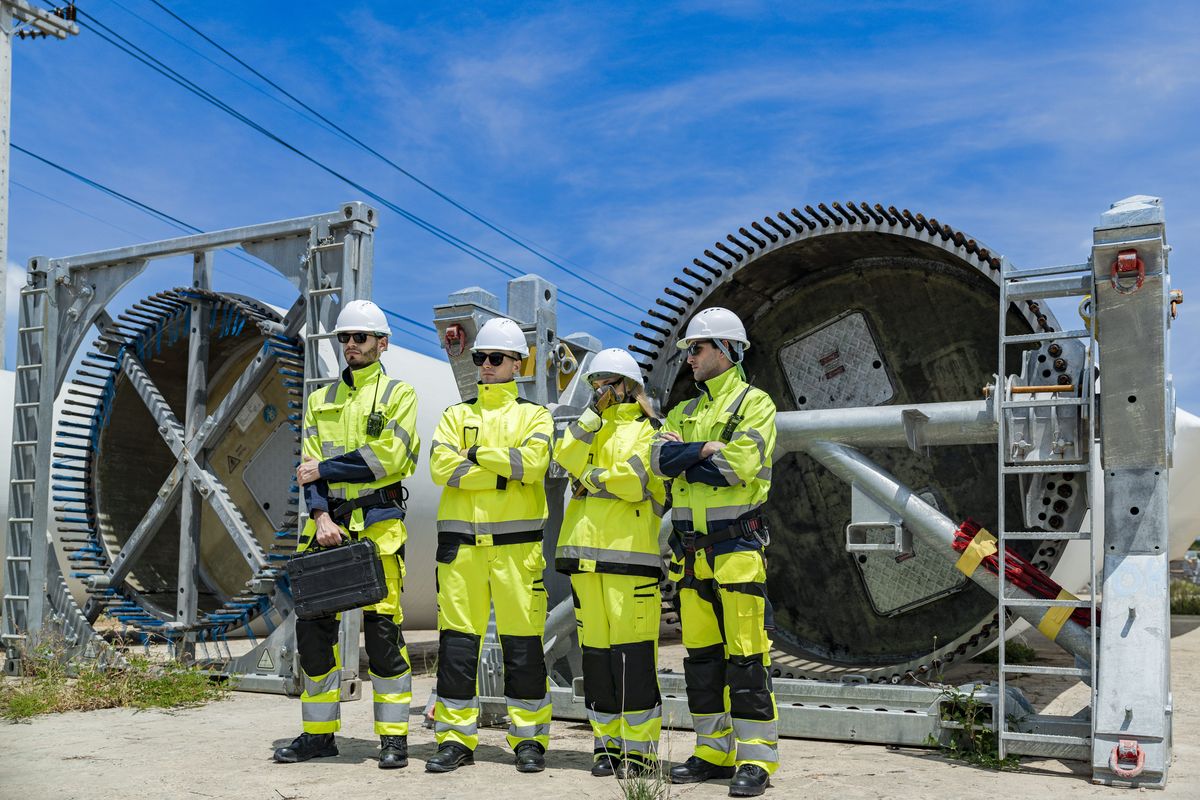
FOCUS Learning's professional services team designs, builds, and maintains the training programs behind regulated, high-consequence work. Same systematic approach to training our platforms are built on, applied by people.
active services engagements in 2026
client organizations in this year's book of work
ways clients engage us, and most grow into several
applying the systematic approach to training
Software records that your people are qualified. It doesn’t decide what qualified means. That comes from a task analysis, the objectives derived from it, materials that teach to those objectives, and evidence an evaluator will accept.
Confidence and rigor aren’t the same thing. Plenty of programs are run by people certain they’re compliant, sitting on an analysis nobody has revisited in years. The paperwork holds up right until somebody tests the reasoning underneath it.
That gap is what we’re hired to close, and it’s why we start with your program, not our catalog.

Six ways clients engage us. Most clients combine several of them and keep the engagement running, because a program needs maintaining rather than building once.
No program yet, or one that won’t survive an evaluation. We start with the analysis and work forward.
The program is defined but nothing exists to teach from. This is the largest share of our project work.
Ongoing support from a technical account manager who knows your program and your evaluator's expectations.
You have the program. You don’t have anyone with time to keep the records defensible.
Moving years of program history into VISION or Qlarity without losing the qualification record.
Our content library holds work already done for programs like yours. Draw from it instead of commissioning it.
Four phases, mapped to the ADDIE model our platforms are built on. The letters spell PATH.

Plan
Analysis
Establish what the job requires. Task analysis, current-state review, and the gap between the two.
Align
Design
Turn findings into a program structure: objectives, training maps, sequencing, and the metrics success will be measured against.
Train
Development and implementation
Build the materials and put them in front of people. Drafts go out in batches for your review before anything is final.
Harness
Evaluation and continuous improvement
Measure against the metrics set in Align, close findings, and set the annual review rhythm that keeps the program current.

Both are recurring and both include the platform. The difference is only whether the services sit inside your subscription tier or alongside it as their own annual agreement.
A defined block of services is priced into your subscription tier. No separate purchase order, no scoping cycle, and a named technical account manager already inside your review calendar.
This is the route we point most people at, because the services and the software are the same method. We designed these platforms around the systematic approach to training, so the analysis we run and the records an evaluator asks for end up in the same system rather than in a folder somebody has to maintain by hand.
Before you plan the year:
An annual agreement with a defined scope, named deliverables and a review calendar, renewing each year. Some clients start with a single analysis and move onto this footing once the program exists, because a program is never finished.
Common shapes:
One thing to be clear about: the deliverables are yours in editable source formats, but a documented program has to live in a system or it decays. That is why services and platform are scoped together.
Worth knowing before the first call:
We built VISION and Qlarity around the systematic approach to training, so the people delivering these engagements work from the same method the platforms enforce. Not a generic consulting playbook with your industry's words swapped in.
Our consultants are practitioners. They have built programs, sat through evaluations, and had to defend a task list to somebody who didn’t want to accept it. That’s a different conversation from a vendor scoping hours against a specification.
It matters because most training teams are small. Two or three people carrying an entire qualification program, with the operating schedule always winning the argument over training time. We’re built to extend that team's judgment, not just its capacity.
So the most useful thing we do is often not the deliverable. It’s the conversation before it: what problem are you solving, what will an evaluator accept as evidence, and what will your instructors still be doing after we leave.
Most training vendors stop at delivery. The deliverable ships, the invoice clears, and nobody establishes whether anything changed on the plant floor.
In the design phase, before anything is built, we pick the operating metrics the program should move: error rates, maintenance cycle time, material consumption, human performance data.
After delivery we map training outcomes back to those same metrics and run the return calculation against them, using your data.
A business impact report that states its confidence range instead of a single flattering figure. If the effect is small, the report says so.
A report that only ever produces good news isn't a measurement. It's marketing with a chart on it.
That comes from a task analysis, the objectives derived from it, and evidence an evaluator will accept.










Organizations across the FOCUS Learning platform and services practice. Logos shown are already published on focuslearning.com.
One engagement, with the outcome the client got. More will appear here as clients approve them.

Oil and gas refining
Inconsistent training, high turnover, and retiring experts left the site struggling to maintain a skilled workforce at its rural West Virginia refinery.
For every gap you can see, a way to close it, starting with your problem rather than our catalog.
Understand the need
What the program is supposed to deliver, and where it currently does not.
Create the plan
A structure that fits the work and survives contact with the operating schedule.
Develop the solution
The materials, the assessments and the qualification paths that make it real.
Deliver lasting results
The part most vendors skip, and the reason programs decay after go-live.
FOCUS is a software company. These engagements are what turn VISION or Qlarity into a program that holds up, which is why they are scoped together and renewed annually.
I have had the opportunity to partner with FOCUS Learning for over four years, and it has been an exceptionally positive experience. They consistently deliver high-quality work that adds meaningful value to our training programs and overall learning strategy.
What truly differentiates FOCUS Learning, however, is their people. Every individual I have worked with has been highly responsive, professional, flexible, and genuinely committed to our success.
While the quality of their work is outstanding, it is the strength of the relationships they build that stands out most.
Since 2022 we have partnered with the Professional Services and Consulting team on our initial training for transmission operators. By combining our internal team with FOCUS’ subject matter experts, we developed two complete, high-quality curricula in just our first year.
We continue to choose them because they truly listen and understand our unique needs. They consistently bring deep expertise, exceptional consultants, and total accountability to every project.
Six questions buyers ask before they scope an engagement.
No. Roughly half our work each year is bought on its own statement of work. That said, our method is built into VISION and Qlarity, so most clients who start with a project end up on a platform. A program you can’t maintain is a program that decays.
A job task analysis establishes what a role does, task by task, validated by the people who do it. Every downstream decision depends on it: what to train, who must be qualified, and what evidence proves it. Build a program without one and you can’t defend why it contains what it contains.
Yes. Training administration is one of our most-renewed services and it’s frequently the first thing a client hands over. We start by auditing the current record state so both sides know what we’re inheriting.
We ask what regulator you answer to, when your next evaluation is, and what already exists. That’s usually enough to tell you whether you need an analysis, a build, or just someone to keep the records straight. If the answer is that you don’t need us yet, we will say so.
A learning management system delivers and records course content. A training management system manages the qualification program around it: the task list, the objectives derived from that list, who is qualified to perform which tasks, and the evidence that proves it. In regulated work the second question is the one an evaluator asks.
ADDIE is the five-phase design process: analyze, design, develop, implement, evaluate. The systematic approach to training is the regulated application of it, which adds the requirement that everything trace back to validated job tasks and that the whole chain be documented well enough to defend. ADDIE is the method. SAT is the method plus the evidence burden.
Completion says somebody attended. Qualification says somebody has demonstrated they can perform a specific task to a standard, assessed by a named evaluator, on a date, against an objective that traces to a validated task list. Proving it means keeping that chain intact and retrievable. That’s what our analysis and documentation work is for.
Tell us your regulator, your next evaluation date, and what already exists. We will tell you what the gap is before anyone talks about scope.

See how VISION, Qlarity, and Professional Services work
together to simplify compliance — and strengthen performance at every level.
©2026 FOCUS Learning Corp. All rights reserved. Privacy Policy